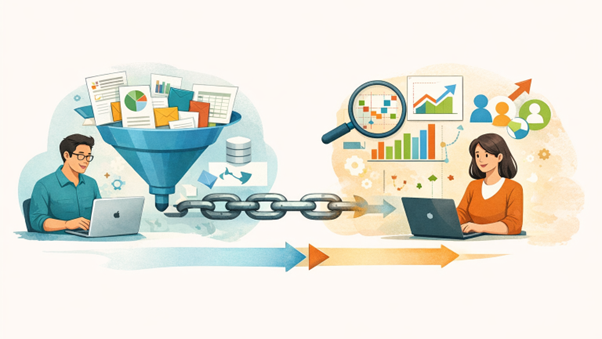
Southeast Asia stands before a historic opportunity worth $835 billion by 2030 thanks to the boom in Artificial Intelligence (according to The Economic Times). However, while technology infrastructure is being heavily invested in, “human infrastructure” – particularly leadership mindset – seems not to have caught up with the pace of development.
At Reputyze Asia, through working with partners from Vietnam to Japan and Korea, we have noticed a commonality: Technology is not the biggest barrier. The barrier lies in outdated management mindsets in a world demanding absolute fluidity.
This article synthesizes strategic analyses from Harvard Business Publishing and McKinsey, outlining the portrait of an AI-era leader with the core model: Agile, Flexible & Future-oriented.
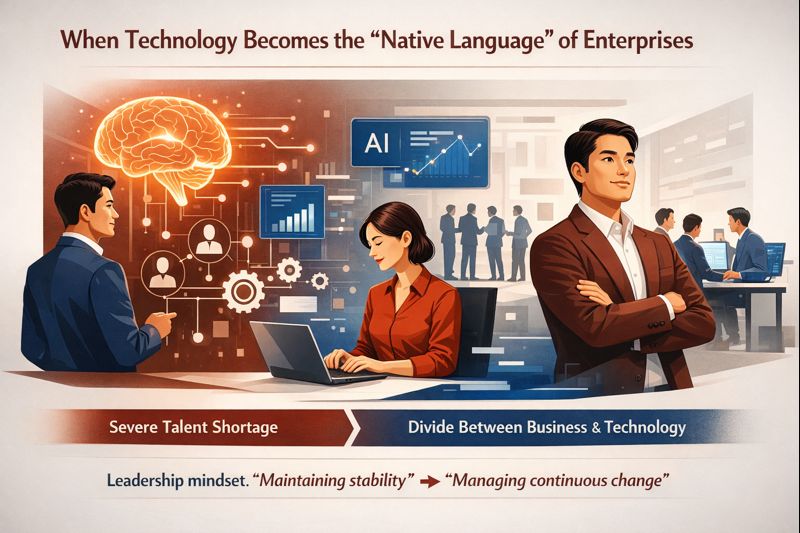
Previously, technology was a support tool. Today, technology is strategy.
Harvard’s “2025 Global Leadership Development Study” indicates that the biggest challenge of 2025 is not managing machines, but managing Collective Intelligence – the resonance between human capacity and the speed of machines.
In the Southeast Asian market, although large corporations are racing to integrate Generative AI, we still face a difficult problem: A severe shortage of talent and a disconnect between the Business department and the Technology department.
Expert View: To succeed, businesses cannot rely solely on a strong Technical department. Transformation must begin with the mindset of the leader: Shifting from a state of “Controlling Stability” to “Managing Continuous Change.”
2. Decoding the New Leadership “Gene”: Agile – Flexible – Future-oriented
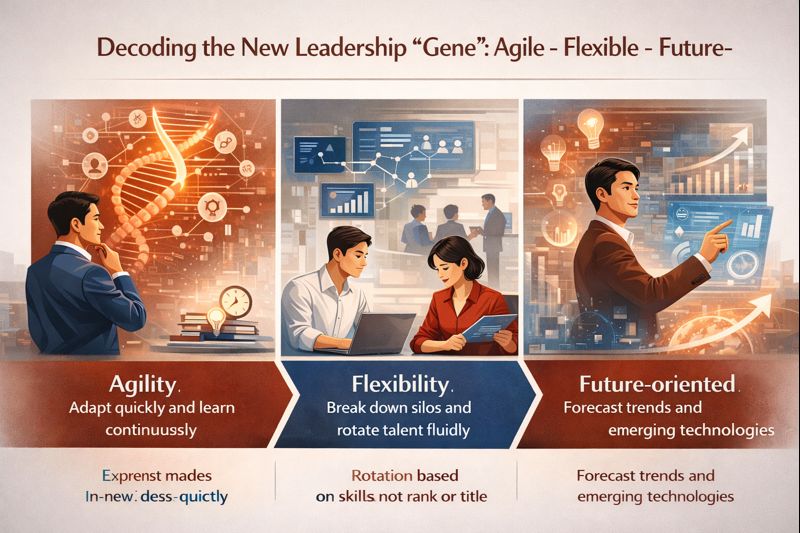
Based on Harvard research, the traditional leadership model is gradually being replaced by these three survival characteristics:
2.1. Agility: The Speed of Adaptability
In the digital era, “fast” does not mean rushing through work. “Fast” is the speed of learning – unlearning old mindsets – and relearning the new.
- Reality: The lifecycle of a digital skill is currently measured in months. A Marketing Automation tool you use today might be obsolete by next quarter.
- Action: Leaders need to build a culture of “Just-in-time Learning” – learning immediately when needed, applying immediately, instead of long-term training courses that are detached from reality.
2.2. Flexibility: Breaking Structural Barriers
Rigid departmental separation (also known as “silos” in enterprises) is the biggest enemy of data flow.
- New Mindset: Personnel should not be “boxed” in a job title. AI-era leadership needs to rotate talent fluidly into special task force projects based on skills rather than rank.
- Example: A Marketing employee with good logical thinking can completely participate in a data analysis project alongside the Technical team.
2.3. Future-oriented: Multidimensional Forecasting Capability
Do not just run after solving incidents (reactive stance). Forecast ahead (proactive stance).
- Leaders need to dedicate at least 20% of their time to observing market signals and emerging technologies.
- The ability to see connections between discrete facts to draw out future scenarios is the core competitive capacity.
3. “Everyone is a Technologist” – Blurring Professional Boundaries
A profound analysis from McKinsey titled “We are all technologists now” has completely changed the concept of personnel.
In Vietnamese enterprises, a prejudice still exists: “I do Sales/Marketing, I don’t need to understand technology deeply.”This is a dangerous mindset. McKinsey proposes the Dual Fluency model:
- Tech-savvy Leaders: Business managers must understand data and how AI operates to make accurate decisions.
- Business-savvy Techs: Conversely, the technical team must understand the “pain points” of customers and financial goals.
When this boundary is erased, businesses will possess “Multi-functional Personnel” – people who can use technology to solve business problems in the most creative way.
4. Action Strategy for Vietnamese & Regional Enterprises
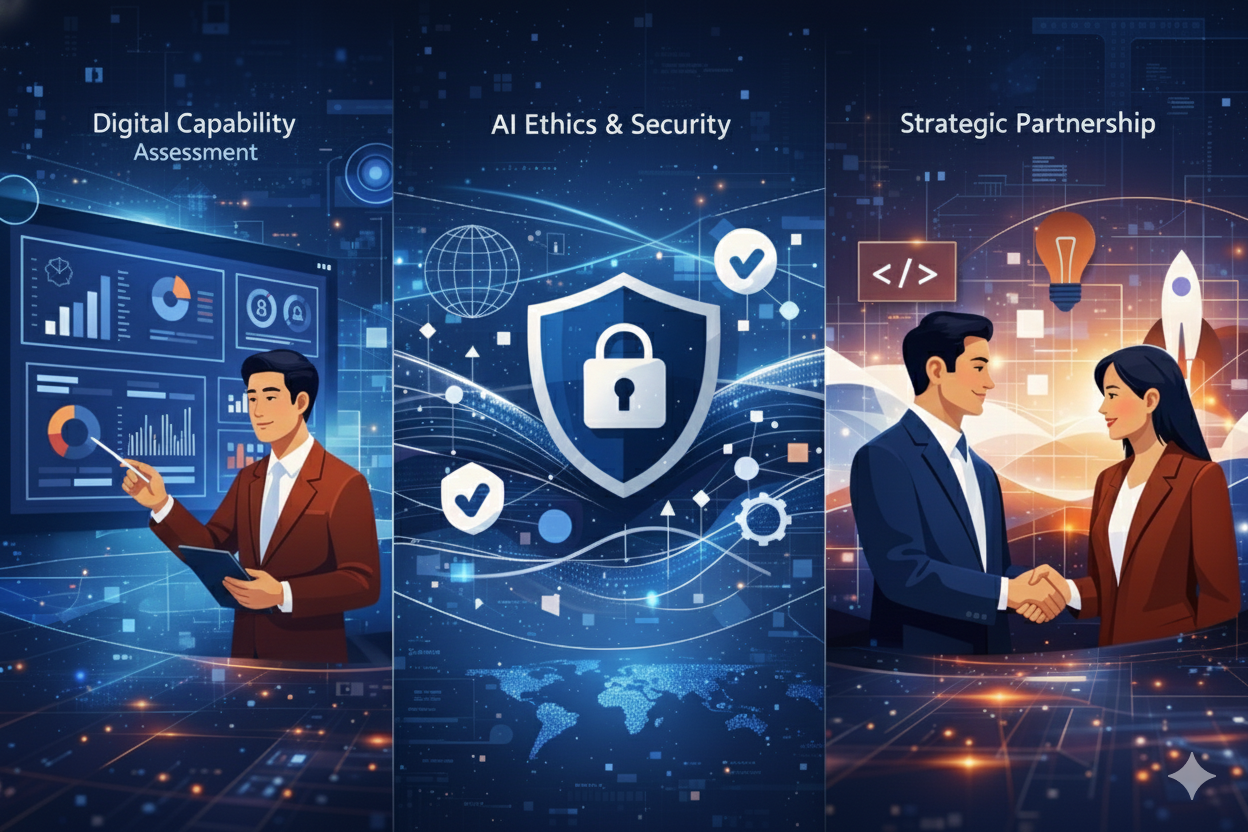
Based on the actual context in Southeast Asia (according to The Economic Times), to avoid being left behind in the $835 billion race, businesses need to implement 3 transformation steps:
- Step 1: Assess the current state of digital capacity. Do not invest blindly. Review what skills the current team is missing: Data Analysis, AI Operations, or Security Mindset?
- Step 2: Standardize AI Ethics. When serving international clients (US, Japan, Europe), data transparency is a vital factor. Establish security standards right from the start.
- Step 3: Seek strategic partners. No business can be good at everything. Combining with consulting units capable of both Technology & Creativity will help shorten the time to market for products.
5. Conclusion
Leadership in 2025 and beyond is not about standing in an ivory tower giving orders, but about creating an environment where Human Intelligence and Artificial Intelligence flourish together. An Agile, Flexible & Future-oriented mindset is the passport for businesses to enter the new era.
About Digityze Asia
We believe that no matter how complex technology is, it needs to be operated by simple and subtle understanding.
At Digityze Asia, we are the intersection between Technical thinking and Creative soul. We not only provide Digital Marketing solutions, we accompany Vietnamese and International enterprises in optimizing operational capacity and sustainable growth.
If you are looking for a partner to share your vision and solve difficult problems regarding Data & Marketing, Digityze Asia is always ready to listen to your story.