Logistics and supply chains are facing increasing pressure from demand volatility, rising operational costs, and growing expectations for faster delivery. In this context, AI in logistics and supply chain is no longer an experimental technology; it has become a foundational capability that enables organizations to shift from reactive operations to predictive and proactive management.
Rather than applying AI to individual use cases in isolation, leading enterprises are moving toward end-to-end AI solution design, where data, processes, and decision-making are seamlessly connected across the entire supply chain.
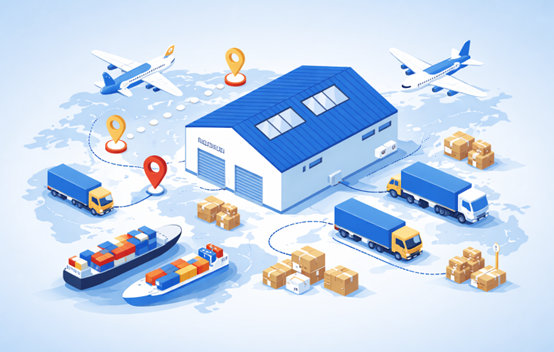
I. Core AI Application Layers in Logistics & Supply Chain
1. AI in Demand Forecasting and Supply Planning
AI enables the simultaneous analysis of historical data, market trends, and real-time demand signals to significantly improve forecast accuracy. This allows organizations to:
- Reduce gaps between planning and execution
Minimize stock shortages and excess inventory - Enhance the quality of short- and mid-term supply planning
Modern AI platforms do not simply “forecast”; they continuously recalibrate plans as input data changes.
2. AI-Driven Inventory Optimization
One of the most tangible benefits of AI-driven supply chain optimization is the ability to dynamically balance inventory based on actual demand. AI helps organizations:
- Define optimal inventory levels across storage locations
- Reduce holding costs and the risk of obsolete stock
- Improve customer service levels
Instead of relying on fixed inventory thresholds, AI operates through adaptive, dynamic models suited to volatile business environments.
3. AI in Logistics Operations and Warehouse Management
In logistics operations, AI supports optimization through:
- Real-time analysis of delivery routes
- Optimized resource allocation within warehouses
- Reduced manual errors in order processing
When combined with automation, AI enables logistics systems to become more flexible, accurate, and cost-efficient.
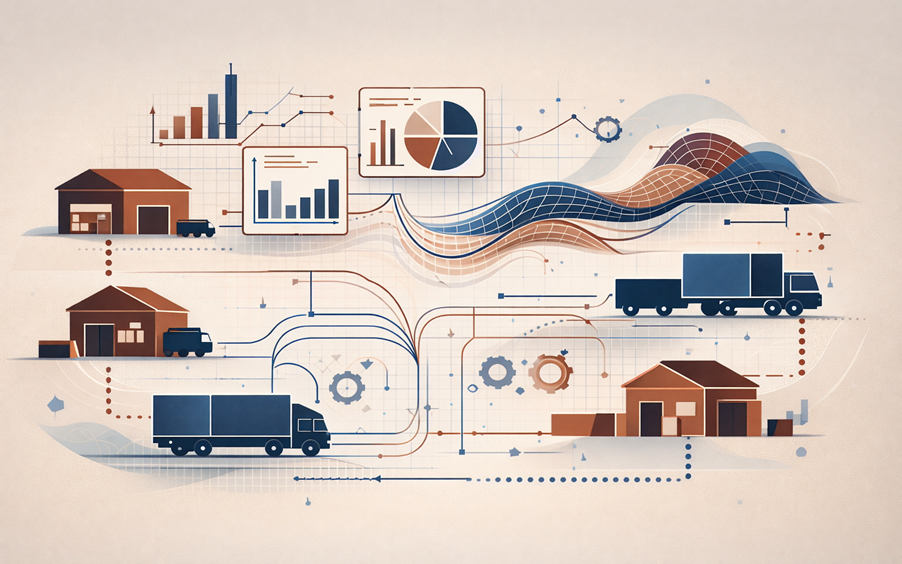
II. AI Decision Intelligence: From Data to Strategic Decisions
Unlike traditional BI systems, AI decision intelligence in supply chain focuses on enabling better decisions. AI does not merely visualize data; it also:
- Simulates multiple “what-if” scenarios
- Analyzes trade-offs between cost, service level, and risk
- Recommends optimal options for decision-makers
This represents a critical advancement, allowing organizations to make faster and more informed decisions in uncertain environments.
1. Challenges in Implementing AI Across the Supply Chain
Implementing AI is not solely a technology challenge. Many organizations struggle due to:
- Fragmented and inconsistent data
- Operational processes that are not standardized
- Unrealistic expectations that AI will “automatically create value” without strong data foundations
As a result, effective AI solution design must begin with business problems, not technology
2. The Right Approach to Designing AI Solutions for Logistics & Supply Chain
A sustainable AI solution should ensure:
- Alignment with operational goals and business strategy
- End-to-end data connectivity across the supply chain
- Integration of AI into decision-making processes, not separation from human judgment
- Phased implementation with measurable business value
This approach enables AI to become a core operational capability, rather than a fragmented technology initiative.
III. Reputyze Asia – Designing AI Solutions Aligned with Business Value
At Reputyze Asia, we approach AI as a combination of engineering and creativity, focusing on designing AI solutions that align with the real operational contexts of logistics and supply chain organizations.
We do not place AI above people. Instead, we use AI to:
- Clarify data
- Support decision-making
- Optimize operational efficiency in a sustainable way
If your organization is seeking a practical and value-driven path for AI in logistics and supply chain, Reputyze Asia is ready to partner with you.