
Choosing the right technology solution provider does more than improve operational efficiency – it directly impacts long-term business growth. This article outlines a structured selection process, practical evaluation criteria, and effective negotiation strategies to help businesses and marketers make informed decisions when investing in software and technology solutions.
I. Context and the importance of selecting the right technology solution provider
1. Technology is no longer a “cost” but a growth foundation
In the era of digital transformation, cybersecurity risk management platforms, marketing automation tools, data analytics solutions, and internal management systems have become the backbone of modern businesses. Selecting the wrong provider not only wastes budget but also introduces risks related to data security, operational workflows, and user experience.
2. What challenges are businesses and marketers facing?
Based on the referenced materials, many organizations struggle because they:
- Fail to clearly define their needs before choosing a solution
- Are attracted by surface-level features rather than real value
- Lack a long-term vendor management and negotiation strategy
As a result, purchased software often fails to deliver its full potential.
II. A 5-step process to select the right technology vendors
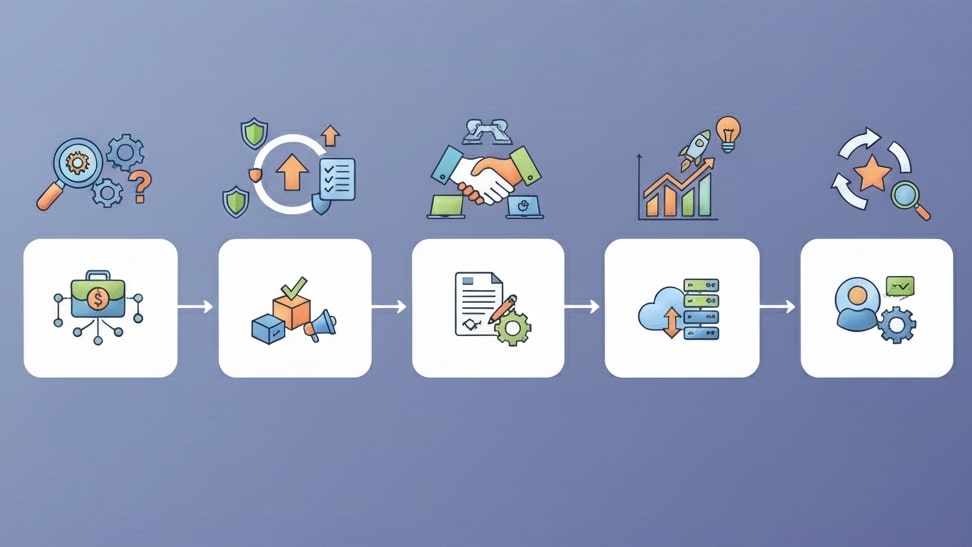
1. Clearly define business goals and core problems
Before approaching vendors, businesses should answer:
- What business objective does this software support? (lead generation, process optimization, data management, etc.)
- Who are the primary users?
- How will success be measured?
This foundational step is critical throughout the vendor selection process.
2. Build a functional requirements list
Requirements should be categorized into:
- Must-have
- Nice-to-have
This approach helps businesses avoid being overwhelmed by unnecessary functionalities.
3. Research and shortlist potential vendors
Common research sources include:
- Official vendor websites
- Case studies and existing clients
- Third-party reviews and evaluations
At this stage, narrowing the list to 3 – 5 vendors enables deeper comparison.
4. Evaluate demos and real-world implementation capabilities
Beyond product demos, businesses should assess:
- Customization to internal workflows
- Implementation timeline
- Technical support and onboarding teams
This step is often underestimated but strongly influences long-term success.
5. Assess total cost of ownership (TCO)
Costs extend beyond initial licensing fees and may include:
- Implementation costs
- Training expenses
- Maintenance and scalability costs
Evaluating TCO helps businesses avoid unexpected hidden costs.
III. Core criteria for evaluating technology solution vendors

1. Industry expertise and domain experience
Vendors with experience in similar industries better understand specific challenges, risks, and operational requirements compared to providers with broad but shallow expertise.
2. Integration and scalability
A reliable provider should:
- Integrate smoothly with existing systems
- Offer a clear product development roadmap
This ensures the solution remains relevant over the next one to two years and beyond.
3. Support, security, and service commitments
Key aspects to clarify include:
- Service Level Agreements (SLAs)
- Data security and compliance policies
- Incident response and issue resolution processes
Although technical, these factors directly affect business credibility and continuity.
IV. Effective negotiation strategies when working with technology providers
1. Negotiate based on value, not just price
Rather than focusing solely on cost reduction, businesses should negotiate:
- Scope of support
- Implementation timelines
- Upgrade and scalability terms
This value-driven approach is emphasized across vendor selection best practices.
2. Clarify contract terms from the beginning
To reduce future risks, contracts should clearly define:
- Termination conditions
- Data ownership rights
- Renewal and extension terms
Early clarity prevents long-term disputes.
3. Treat vendors as long-term partners
Between vendors and business should be a mutually beneficial partnership encourages (win-win):
- Proactive improvement suggestions from vendors
- Stronger and more responsive support
This strategic mindset is essential but often overlooked.
V. Common mistakes businesses often make
1. Choosing vendors solely based on brand reputation
A well-known brand does not guarantee suitability for every business size or budget.
2. Lacking an internal owner
Without a dedicated internal stakeholder, implementation often becomes fragmented and ineffective.
3. Skipping post-implementation evaluation
Regular reviews help optimize usage and measure actual return on investment.
Conclusion
Selecting the right technology solution provider is a strategic process—not a short-term decision. With a clear selection framework, defined evaluation criteria, and thoughtful negotiation strategies, technology becomes more than a support tool; it becomes a sustainable growth driver.
At Digityze Asia, we combine technical expertise with creative thinking to support businesses in evaluating, selecting, and implementing the right technology solutions. If you are considering investing in marketing software, cybersecurity risk management platforms, or enterprise management systems, Digityze Asia is ready to support you from strategy to execution.