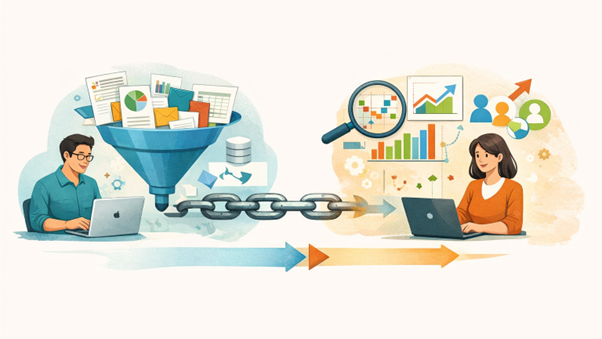
For many years, Customer Relationship Management (CRM) systems have played a central role in storing and managing customer information for businesses. However, as customer journeys increasingly span multiple channels simultaneously, traditional CRM systems have begun to reveal clear limitations.
Customer Data Platforms (CDPs) were developed to address single customer view, enabling businesses to gain deeper customer insights and deliver personalized experiences in real time.
I. What is a Customer Data Platform (CDP) and why CRM is no longer sufficient in today’s market
1. What is a Customer Data Platform?
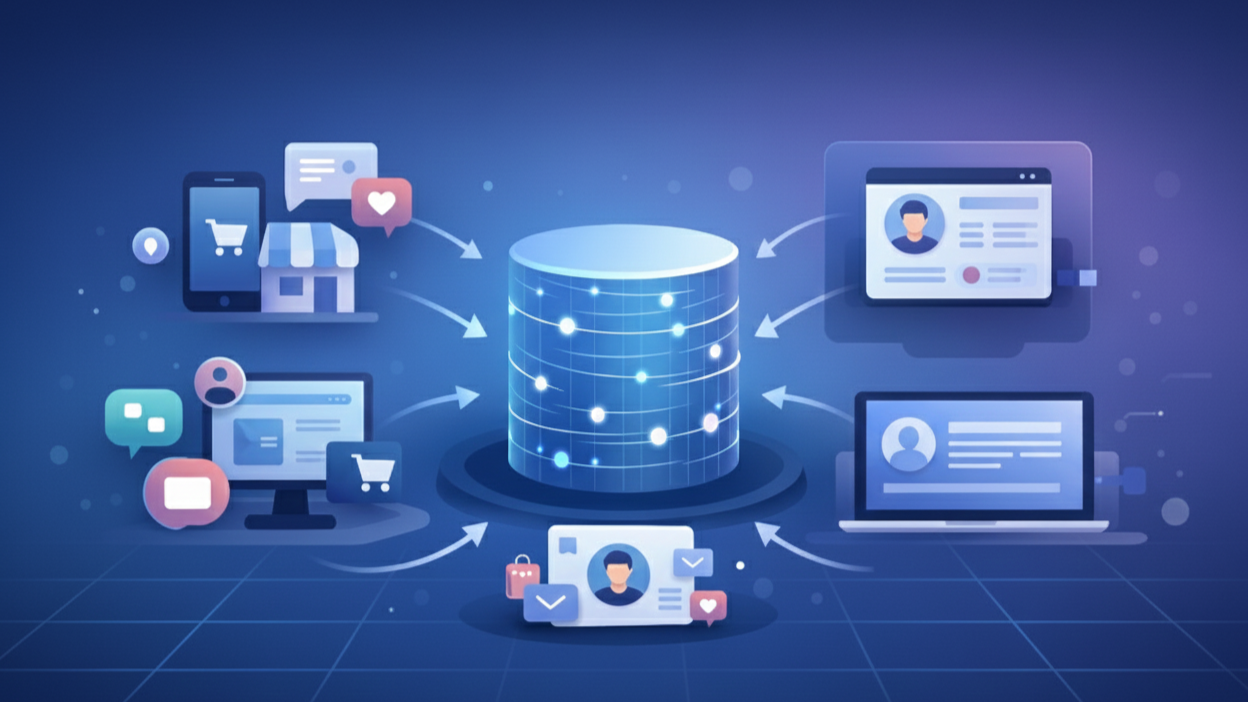
A Customer Data Platform (CDP) is a system designed to collect, unify, and manage customer data from multiple sources, including websites, mobile applications, CRM systems, sales platforms, advertising platforms, and marketing tools.
The core value of a CDP lies in its ability to create unified customer profiles and enable businesses to activate this data directly for marketing, customer engagement, and data analysis initiatives.
CDPs collect online and offline data to build 360-degree customer profiles.
2. Changes in customer behavior
Today’s customers no longer interact with brands through a single channel. They may:
- Research products on websites
- See advertisements on social media
- Purchase in physical stores
- Respond via email or chatbot
When data from these touchpoints remains disconnected, businesses struggle to understand the complete customer journey.
II. Limitations of traditional CRM systems in a multichannel environment
1. CRM focuses on management, not data activation
CRM systems are designed to manage contact information, transaction history, and sales pipeline. While this works are well for sales and customer service, it becomes restrictive when marketers require:
- Real-time behavioral data
- Insights from channels outside the CRM ecosystem
- Dynamic customer segmentation based on behavior
2. Fragmented data and reliance on IT teams
In many organizations, marketing data is scattered across multiple tools. Connecting and cleaning this data often requires IT involvement, limiting marketers’ ability to independently test, optimize, and scale campaigns.
III. How Customer Data Platforms solve data challenges?
1. Unifying data from multiple sources
CDPs can connect and standardize data from various systems, including first-party data, online and offline. This ensures that all customer interactions are consolidated in a single platform.
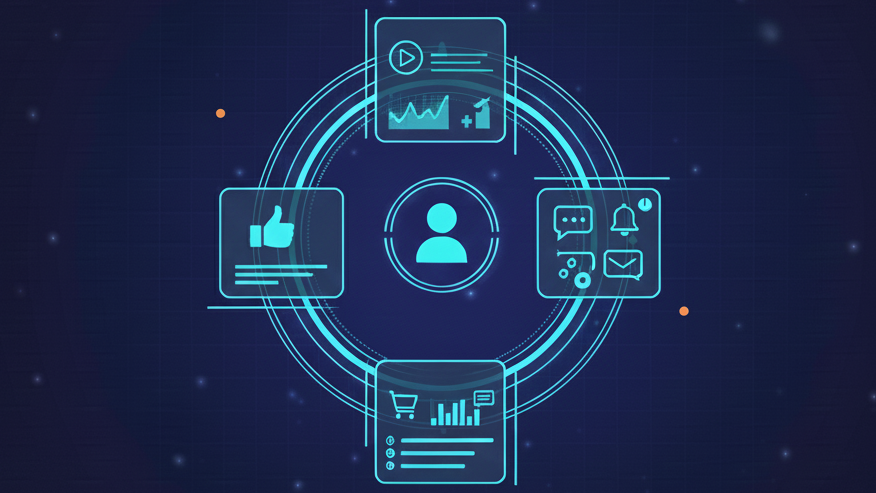
2. Building 360-degree customer profiles
Instead of seeing only names, email addresses and purchase history, CDPs allow businesses to view:
3. Data that is ready for activation
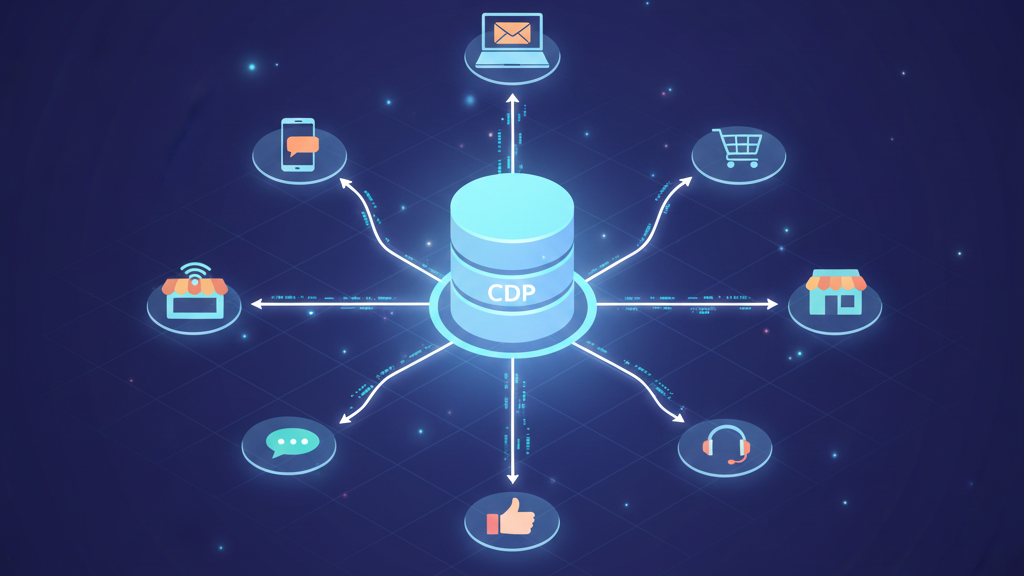
Unlike traditional data warehouses, CDPs are designed for direct use by marketing teams. Data stored in a CDP can be seamlessly activated across email platforms, advertising systems, website personalization tools, or CRM systems.
IV. Business value of CDPs for marketers and organizations
1. Personalized customer experiences
CDPs enable businesses to personalize messaging, offers, and content based on real customer behavior rather than assumptions or static segments.
2. Improved marketing efficiency
With unified and continuously updated data, marketers can:
- Target audiences more accurately
- Reduce wasted advertising spend
- Measure campaign performance across multiple channels
3. Data-driven decision-making
CDPs provide a reliable data foundation for analyzing customer journeys, supporting strategic decisions related to products, marketing strategies, and customer experience initiatives.
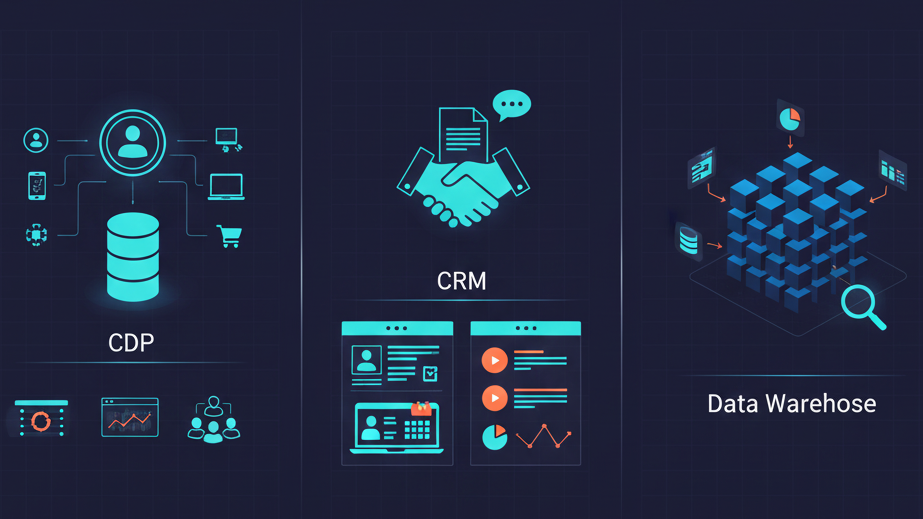
V. How CDP, CRM, and Data Warehouses differ
1. CDP vs. CRM
CRM systems are ideal for managing relationships and structured sales processes, while CDPs focus on behavioral data and marketing activation. These systems do not replace one another but work best when integrated.
2. CDP vs. Data Warehouse
Data warehouses excel at storing and analyzing large volumes of data but are often difficult to use directly for marketing purposes. CDPs act as an intermediary layer, transforming raw data into actionable insights for business teams.
VI. When should businesses invest in a Customer Data Platform?
1. When customer data is spread across multiple systems
If a business uses numerous marketing and sales tools without a unified customer view, implementing a CDP becomes a critical step.
2. When personalization is a strategic priority
Organizations aiming to enhance customer experience and increase customer lifetime value need CDPs to deliver personalization at scale.
3. When marketers need greater control over data
CDPs reduce dependency on IT teams, enabling marketers to experiment faster and optimize campaigns more effectively.
Conclusion
As customer journeys become more complex and data sources continue to expand, traditional CRM systems alone can no longer support sustainable growth. Customer Data Platforms offer a modern approach that helps businesses unify customer data, gain deeper insights and activate personalized experiences at scale.
At Digityze Asia, we combine data engineering capabilities with creative marketing thinking to help organizations design and leverage CDP solutions aligned with their business objectives. If you are looking for a flexible, scalable data platform that delivers real business value, Digityze Asia is ready to support your journey.